Live animal transportation
For organizations and private clients: a crate sized for the animal to IATA LAR requirements, veterinary documents and coordination with the carrier before departure. Climate control and supervision along the entire route.
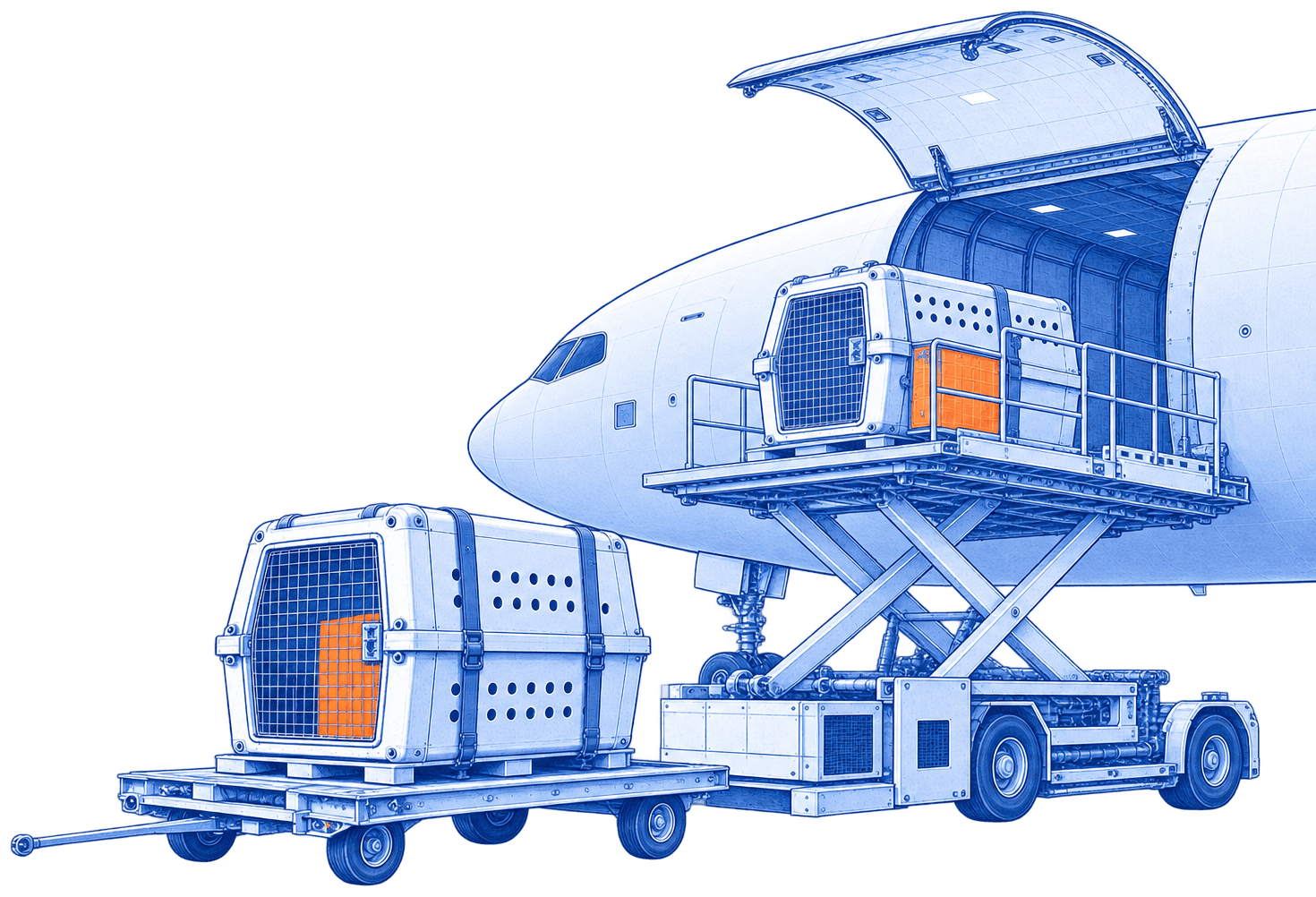
Which animals we carry and under what rules.
Different animals need different documents and different crates. Each route is built around the specific animal, not a category.
Large and wild animals
Zoos, exhibits, rehabilitation centers: predators, hoofed animals, primates. The crate and route are designed for the specific animal.
Breeding and farm animals
Breeding livestock, horses, poultry. Consignments under veterinary control, with export and import paperwork.
Exotic and rare species
Protected species: CITES permits, destination country requirements, separate handling in transport and on acceptance.
Pets
Dogs and cats moving with their owners to a new home — including routes where the animal flies unaccompanied.
Five steps before dispatch.
The sequence is the same for a zoo tiger and for a cat moving with its owners. What changes is the content of each step.
Consultation and assessment
We find out the species, size and weight of the animal, where it is traveling from and to, whether there is an attendant, and any health or behavioral specifics. If the route is unrealistic, we say so right away.
Crate or cage under IATA LAR
We select a container for the animal: size, ventilation, water container, strength and secure fastening. IATA LAR requirements are not a recommendation: the carrier simply will not accept a non-compliant crate.
IATA LAR · standardVeterinary documents
A veterinary passport with vaccination records, a veterinary certificate, destination country requirements and, for protected species, CITES. We provide the list for the specific shipment and help you put it together.
CITES · veterinary certificateCoordination with the carrier
Not every aircraft takes live cargo: we book space in advance, confirm the crate dimensions and conditions in the hold, and agree on drop-off, connection and acceptance times.
Transport and handover to the consignee
Supervision of loading, climate control in the hold, contact with ground services at connections so the crate is not left standing in the open. We hand the animal over to the consignee in person.
Who prepares what.
Without veterinary documents the animal will not travel — but you will not have to collect them alone. Responsibilities are split from the start.
What we need from you
5 itemsSpecies, breed, age and weight
These determine the crate, the conditions and the carrier’s requirements.
Veterinary passport
With vaccination and treatment records.
Dimensions of your existing crate
If you already have a crate, we will check it against IATA LAR.
Health and behavior information
Chronic conditions, pregnancy, stress tolerance, veterinarian’s prescriptions.
Addresses and receiving party
Who meets the animal at the other end and at what time.
What we take on
Our zoneCrate selection under IATA LAR
Size, ventilation, water container, fastening — for the specific animal.
Veterinary document check
We will tell you what is missing and help obtain it.
CITES for protected species
Export and import permits, destination country requirements.
Booking and coordination with the carrier
An aircraft that takes live cargo and confirmed conditions in the hold.
Supervision and handover to the consignee
Monitoring at connections and contact with the receiving party.
What we use — and what we do not.
For live cargo, time in transit is a condition of carriage, not a line in the rate. That is what drives the choice of transport.
Air
IATA LARThe main mode for long routes: less time in transit means less stress for the animal. Crate and hold requirements follow IATA LAR; we book space in advance.
When the distance is long or the animal does not tolerate long journeys well.
Road
Crate and climateAn equipped vehicle with climate control, stops and care along the way. Works both as a standalone route and as delivery to or from the airport.
When the distance is moderate — or the animal needs a gentle ride to the terminal.
Sea
Not offeredWe do not offer sea transport for live animals: the voyage duration and onboard conditions make it impossible to maintain the right conditions. If the route is possible only by sea, we will say so plainly.
Not an option.
Most often the route is combined: road to the terminal, a flight and road again to the consignee. We plan the connections first — that is where the animal waits longest.
Three situations when people call us.
Our core clients are organizations, but the rules and the work are exactly the same for a private pet.
Zoos and exhibits
Animal exchanges, new exhibits, returns after rehabilitation. We work with zoos and breeding centers in southern Russia.
Kennels and breeding centers
Breeding animals and batches of young stock — with veterinary support and paperwork at both ends of the route.
Private pet owners
Moving to another city or country: a dog or cat travels under the same rules as a shipment for a zoo.
Get it right before the request — faster than redoing it afterward.
What people ask about animal transportation.
Live cargo almost always travels in combination.
The niche sets the requirements, while the route is built from ordinary legs and paperwork at the connections.