Sea freight in FCL and LCL containers
We ship containers from Asia, Africa and the Middle East — the main port of arrival is Novorossiysk. Full loads and consolidated shipments from one cubic meter, then from port to door.
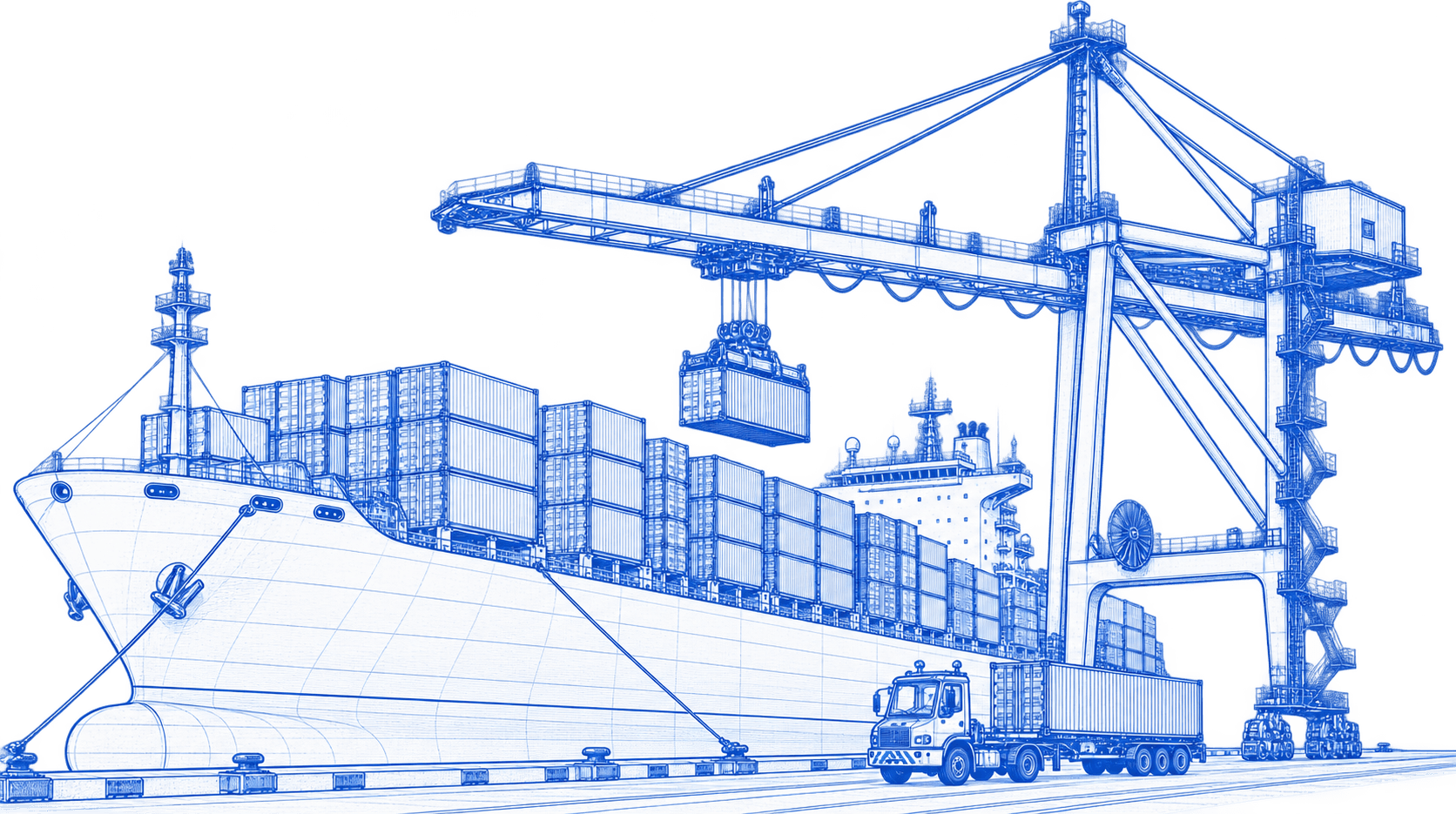
FCL or LCL — a whole container or space in one.
Everything else in sea freight is secondary. Both the rate and the transit time depend on this choice.
Heavy, bulky and non-urgent cargo is better shipped by container: on such shipments sea wins on cost by a wide margin. We cover this lane end to end — from the quote to release to the consignee.
Full container
The whole container is yours: 20 or 40 feet, one seal for the entire journey.
Consolidated cargo
Your volume travels in a shared container together with other shippers’ consignments.
The cargo fills the whole container: 33 m³ in a twenty-foot, 67 m³ in a forty-foot.
From 1 m³. You pay for your volume; the rest of the container is taken by other consignments.
The container travels as is: no waiting for other cargo and no unpacking at a warehouse on arrival.
Consolidation at the port of loading and deconsolidation after arrival are added to the sea passage.
The rate is for the whole container. With a good load, each cubic meter costs noticeably less.
Charged by volume or weight, whichever is greater. For small shipments it is the only sensible option.
The container is sealed at the shipper and opened at the consignee. Nobody goes inside.
The cargo is handled at least twice at consolidation warehouses together with other consignments.
Standard packaging and securing inside the container are enough.
Sturdy palletized packaging is needed: the cargo is moved by forklift and placed next to other cargo.
One rate — the whole container journey.
We organize sea freight through container line agents. The rate covers the whole route: container delivery to the shipper, port, freight, unloading and delivery to the consignee’s door.
Customs clearance is a separate line: we prepare the document package, and a licensed broker partner files the declaration. Along the way, the logistics manager reports the status — from loading to release.
Sea is rarely the whole shipment.
The container arrives at the port, not at your warehouse. Then you need delivery, clearance and sometimes storage — these are related services.