Our own warehouse in Rostov-on-Don
Receiving, storage and preparing cargo for the flight — at the same address as our office. One location and one logistics manager: no need to arrange receiving with one party and dispatch with another.
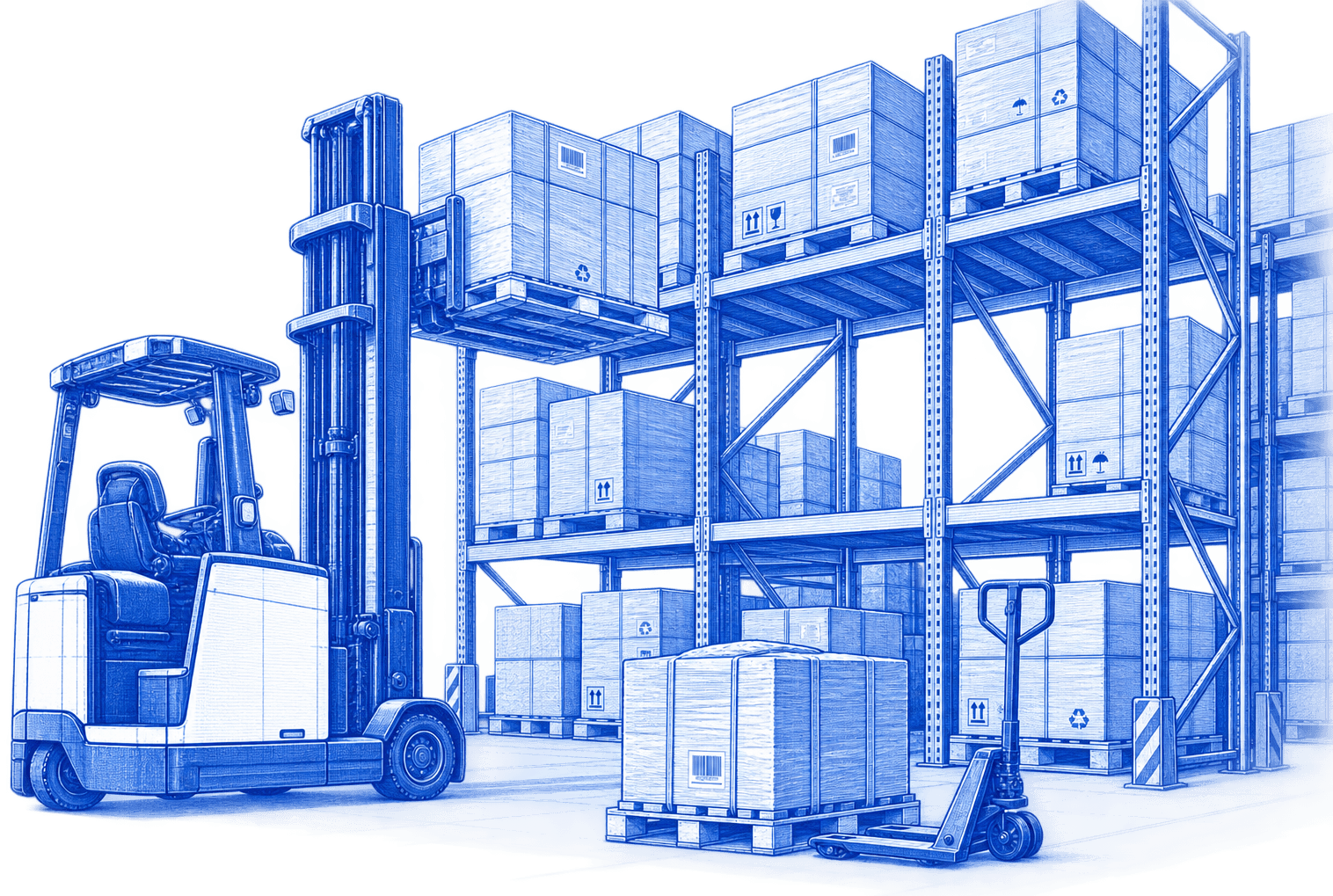
What the warehouse does in your shipment.
A warehouse is rarely needed on its own. It is needed when the cargo arrives before the truck, waits between deliveries or is not ready for loading.
Our warehouse is our own, at the office address. That matters: receiving, storage and dispatch are handled by one logistics manager, not three contractors who do not talk to each other. The cargo can be inspected, recounted and repacked the same day a question comes up.
A transit buffer between flights
The aircraft lands at night, the truck leaves in the morning — the cargo spends those hours with us. Without a buffer the route breaks: the carrier does not wait, and the consignee is not ready to receive at three in the morning.
Long-term storage for your sales cycle
The shipment arrives in full and goes out in parts — as the goods sell. We hold the stock and assemble shipments on your request.
Preparing cargo for the flight
We bring the cargo into a condition the carrier will accept: repacking, labeling, palletizing, crating. Most often this is cheaper than a refused loading.
Receiving and dispatch — in a time slot agreed with the logistics manager
Packing special cargo — to the carrier’s requirements
When cargo is dangerous or oversized, the work starts before it reaches the shelf: you need to know which packaging is allowed, how to label it and how to secure it so the carrier accepts the cargo at all.
We have been doing this since 2006. Not because it pays, but because otherwise half of our non-standard shipments would simply not leave — and looking for a separate packer for each one makes no sense.
Packaging to ADR and IMDG requirements
Containers, marking and securing to the requirements for carrying dangerous goods by road and sea. The cargo must arrive in a condition the carrier will accept and inspection will pass.
Crating, boxes and fastening
Wooden crating, made-to-size boxes, a securing plan and lifting points. For equipment and steel structures this is most often the only way to survive transshipment en route.
The warehouse works inside the route.
Storage most often appears in a shipment not as a separate line, but as a pause between route legs or as preparation for a flight.