Dangerous goods shipping
Classes 2–6, 8 and 9 — including lithium-ion batteries. Air under IATA DGR, road under ADR (the Agreement concerning the International Carriage of Dangerous Goods by Road), sea under IMDG: we sort out packaging, labeling and documents before dispatch, not en route.
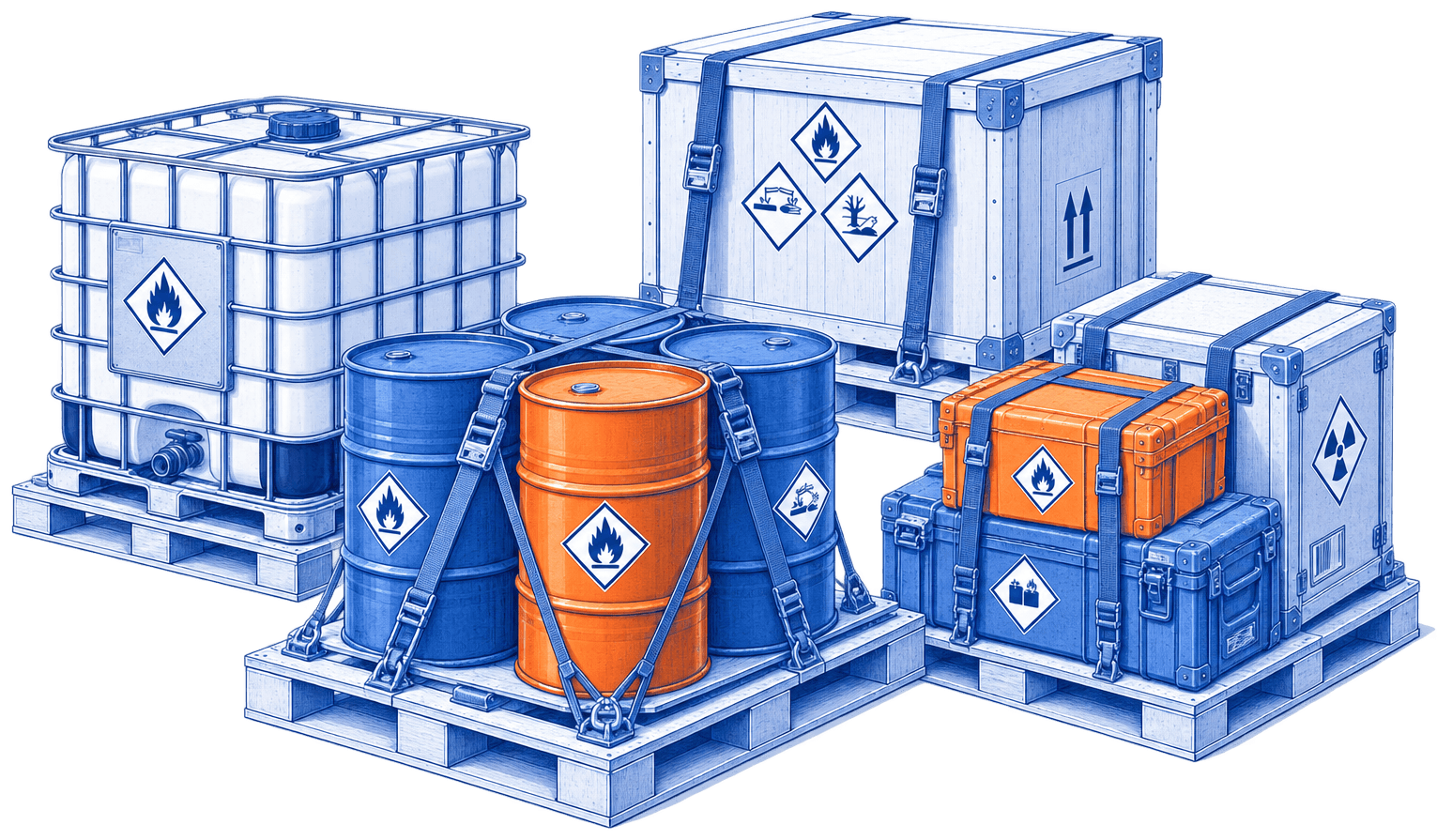
Four groups, each with its own regulations.
The group determines the packaging, labeling and permitted transport. The exact requirements follow from the UN number and packing group in the safety data sheet.
Gases
Compressed, liquefied and dissolved under pressure: industrial gases in cylinders, refrigerants, aerosol products.
Flammable liquids and chemicals
Flammable liquids: solvents, paints and varnishes, alcohol-based compounds, additives.
Oxidizers and toxics
Flammable solids, oxidizers and peroxides, toxic and infectious substances.
Corrosives and miscellaneous
Acids, alkalis and electrolytes, as well as other dangerous substances of Class 9 — this is where lithium-ion batteries belong.
What we take — and what we never take.
We carry Classes 2–6, 8 and 9, each under its own procedures. We do not take Class 1 or Class 7 — and we say so in the first email.
Gases
Cylinders with industrial gases, refrigerants, aerosols, pressurized equipment.
Flammable liquids
Solvents, paints and varnishes, alcohol-based compounds, fuel additives.
Flammable solids
Sulfur, metal powders, substances liable to spontaneous combustion or dangerous when wet.
Oxidizers and peroxides
Bleaches, hydrogen peroxide, resin components and hardeners.
Toxic and infectious
Pesticides, laboratory reagents, diagnostic and biological specimens.
Corrosives
Acids and alkalis, electrolytes, lead-acid batteries.
Miscellaneous
Lithium-ion batteries and equipment containing them, magnetized materials, dry ice.
Classes 1 and 7
We do not carry explosives or radioactive materials. We say so right away and will recommend a specialized carrier.
Permitted transport depends on the division, UN number and packing group — we check each specific item before booking
Five steps before dispatch.
The sequence is the same for a gas cylinder and for a pallet of batteries. What changes are the documents and approvals within each step.
Cargo classification and UN number
From the safety data sheet we determine the class, division, UN number and packing group. Everything else depends on this: packaging, labeling, permitted transport and the document set.
MSDS · UN numberPackaging and labeling by class
We select certified packaging for the packing group and apply hazard labels and transport markings. We pack the cargo ourselves or accept your packaging — if it meets the requirements.
Route and transport approval
We check that the class is accepted by the chosen transport and book space with an approved carrier — not every aircraft or terminal accepts dangerous goods — and agree on transshipment conditions and compatibility with adjacent cargo.
Documents
Dangerous goods declaration, emergency card, transport documents and, if needed, permits and insurance. We put the set together before the vehicle arrives, not at the terminal.
DGD · emergency cardMonitored transportation
Supervision of loading and securing, status at every leg, contact with the carrier and the consignee. One logistics manager handles it — the same one who priced the route.
Who prepares what.
We do not shift the paperwork onto the shipper, and we do not pretend we can manage without the source data. Responsibilities are split from the start.
What we need from you
5 itemsSafety data sheet (MSDS/SDS)
The key document: it gives us the class, UN number and packing group.
Exact name and composition
The trade name rarely matches the name in the transport regulations.
Weight, dimensions and number of pieces
Actual, not planned — the booking depends on them.
Packaging details
If you already have packaging — its type, markings and certificate.
Addresses and contacts of the parties
Shipper, consignee and the person receiving the cargo on site.
What we take on
Our zoneClassification and acceptability check
We tell you right away whether the cargo can go by the chosen transport and in what quantity.
Certified packaging and labeling
Packaging matched to the packing group, hazard labels, transport stickers.
Dangerous goods declaration and emergency card
We prepare them and hand them to the carrier together with the cargo.
Booking with an approved carrier
An aircraft, terminal and truck that accept your class.
Insurance and monitoring en route
A policy for the cargo and status at every leg until unloading.
Three modes of transport and their limits.
Dangerous goods rarely have a choice of all three: most often the class and quantity rule out some of them before the quote.
Air
IATA DGR · our certificateThe main mode when the cargo is needed fast or goes abroad. We work under IATA DGR — the certificate is valid. Restrictions by class, condition and quantity are checked before booking.
When every day counts and the class is permitted by air.
Road
ADRAn ADR-approved vehicle and a trained driver, vehicle placarding, an agreed route and stops. Works within Russia and on international routes.
When you need a direct door-to-door route — or delivery to the airport or port.
Sea
IMDGContainer shipments under IMDG rules: stowage in the container, segregation of incompatible classes, documents for the port and the shipping line.
When the volume is large and the timeline allows for sea.
Most often the route is combined: road to the airport or port, air or sea for the main part of the journey, and road again to the consignee’s warehouse. We check class compatibility and transshipment conditions at every connection in advance.
Three situations when people call us.
Dangerous goods are rarely shipped out of interest in the regulations — they are shipped because otherwise production or supply would stall.
Chemical manufacturers
Regular shipments of solvents, paints or reagents to warehouses and customers. You need a carrier who knows the regulations and does not disrupt shipments.
Importers of battery-powered equipment
Equipment with lithium-ion batteries is Class 9, even if otherwise it is ordinary cargo. We put the documents together so the shipment is not offloaded from the flight.
Procurement at industrial plants
A one-off purchase of gases, acids or peroxides for a repair or a line start-up. One logistics manager instead of four contractors and three weeks of emails.
Get it right before the request — faster than redoing it afterward.
What people ask about dangerous goods.
Dangerous goods almost always travel in combination.
The class sets the requirements, while the route is built from ordinary legs and paperwork at the connections.