Perishable cargo shipping
Temperature-sensitive cargo with an unbroken cold chain. Air first — when every hour counts; reefer trucks on the legs to and from the airport. We monitor the temperature along the entire route — temperature sensors inside the cargo.
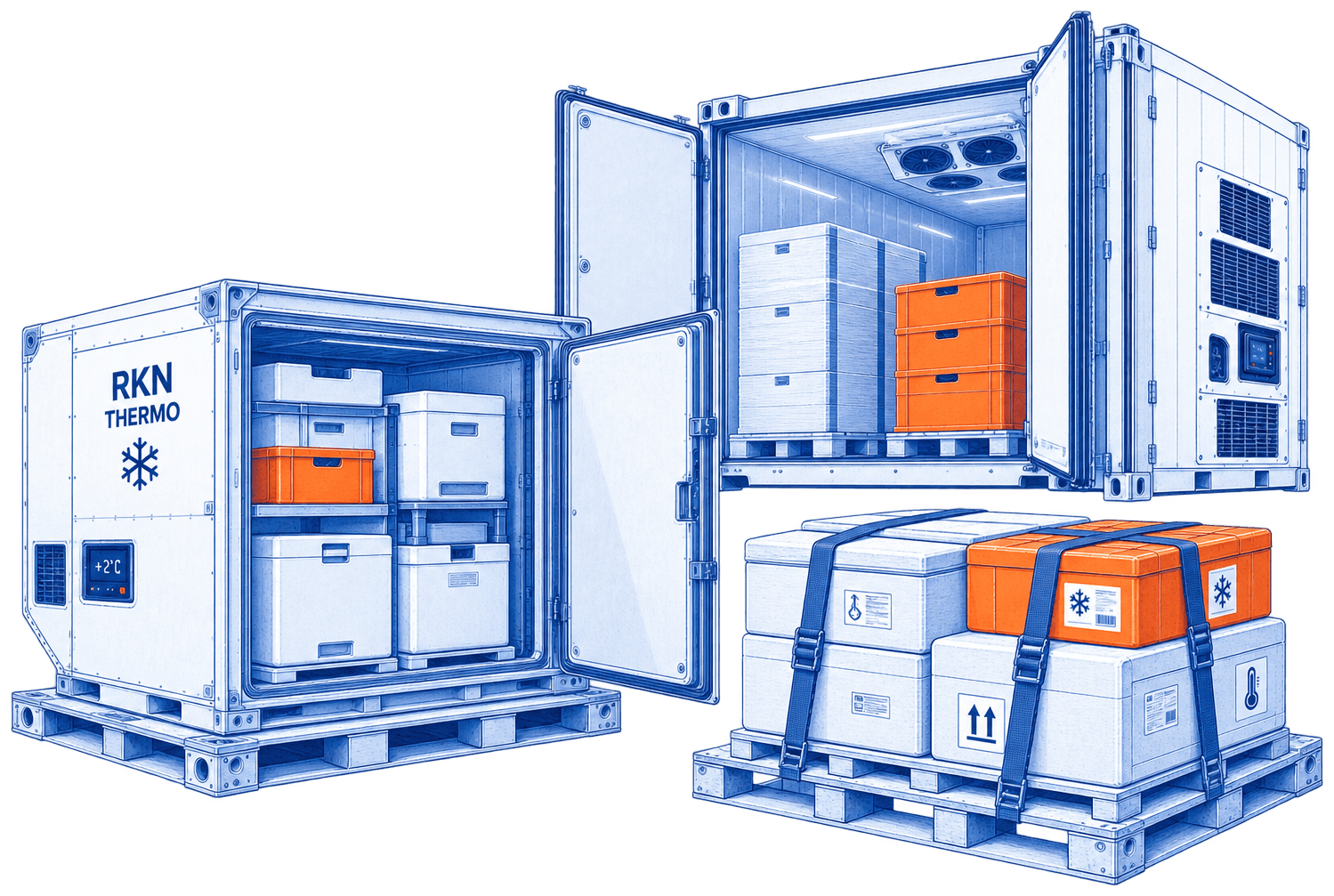
Three groups — each with its own temperature range.
We select the temperature range, packaging and transit conditions for the specific cargo. One thing is common: the cold chain is not broken from loading to handover to the consignee.
Food products
Products for which transport without temperature control means losing the consignment. We ship them in an unbroken cold chain, with the temperature range selected for the cargo.
Pharma and biological materials
Vaccines and biological materials — cargo where every hour counts and a broken chain is not forgiven. Temperature sensors inside the cargo, connections planned before dispatch.
Other temperature-sensitive cargo
If your cargo needs temperature control, tell us what you are shipping: we will say honestly whether we can build a cold chain for it.
Five steps — we plan the connection first.
A break in the cold chain most often happens not in transit but at a connection. That is why the route starts not with the rate but with the temperature range and connections.
Cargo temperature range
We clarify what temperature range the cargo needs and what packaging it will travel in. Everything else depends on this: transport, connections and the acceptance window.
Temperature · packagingRoute and connections
We build the route: air first — when every hour counts — and reefer trucks on the legs to and from the airport. We plan connections first: who receives the cargo at each transfer and how long it will stay there.
Air + reefer trucksTemperature sensors
We place temperature sensors inside the cargo — their data shows what happened to the temperature at every leg of the route.
Acceptance window
We agree on the acceptance window with the consignee in advance — the last connection is planned just like the first.
Monitored transportation
We check the temperature at every transfer and stay in touch with the carrier and the consignee. One logistics manager handles it — the same one who built the route.
Who prepares what.
Responsibilities are split from the start. The exact list of documents depends on the cargo and destination — we name it when we quote.
What we need from you
3 itemsCargo type and temperature range
The cargo name, the required temperature range and how the cargo is packed now.
Weight, dimensions and number of pieces
Actual, not planned — booking and the choice of transport depend on them.
Addresses and contacts of the parties
Shipper, consignee and the person receiving the cargo during the acceptance window.
What we take on
Our zoneA route with planned connections
Who receives the cargo at each transfer and how long it will stay there.
Temperature control en route
Temperature sensors inside the cargo and a check at every transfer.
Temperature-controlled transport
A flight, with reefer trucks for pickup and delivery.
Acceptance window with the consignee
Agreed in advance — before dispatch, not on arrival.
Air and reefer trucks — one chain.
Transport for temperature-sensitive cargo is chosen by one criterion: whether it holds the temperature and will not delay the cargo at a connection.
Air
Core of the routeAir first — when every hour counts. We build the flight and the legs around it so the cargo does not wait at a connection longer than planned.
The default for perishables: every hour counts.
Road
Reefer trucksReefer trucks on the legs to and from the airport: pickup and delivery run under temperature control and are built into the overall chain rather than running on their own schedule.
Legs to and from the airport — in a reefer, not a curtainsider.
A perishables route is almost always combined: a reefer to the airport, a flight, and a reefer again to the consignee’s door. We check the temperature at every transfer, and the acceptance window is agreed in advance.
Three situations when people call us.
Temperature-sensitive cargo gives no second chance: if the chain breaks, there is nothing left to ship.
Food suppliers
Food consignments that need temperature control from loading to handover to the consignee. We keep the chain intact along the entire route, and you have the sensor data in hand.
Pharma and laboratories
Vaccines and biological materials: connections planned before dispatch, the acceptance window agreed, temperature sensors inside the cargo.
Shippers of urgent cargo
When every hour counts: a flight, reefer trucks for pickup and a quote the same business day.
Get it right before the request — faster than redoing it afterward.
What people ask about perishables.
A cold chain is built from ordinary legs.
The temperature range sets the requirements, while the route consists of air and road legs with connections planned in advance.